
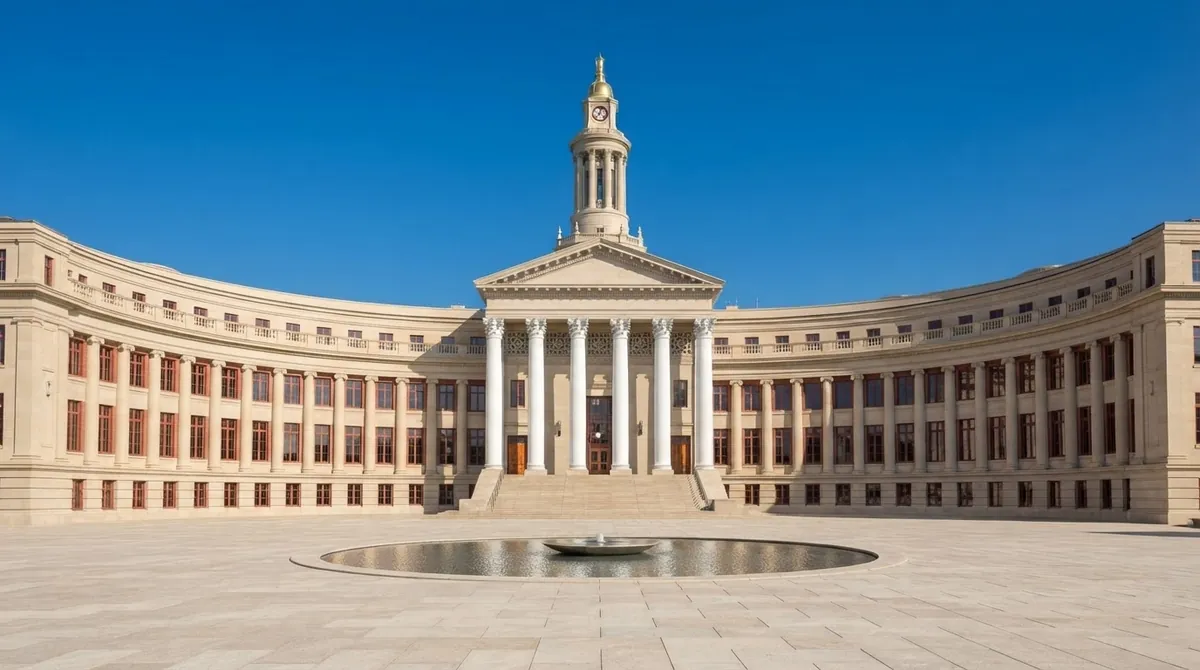
Court records in the City and County of Denver, Colorado, are maintained by the clerks of the various Denver courts and can be accessed through online tools, official court portals, and the clerk's office. DenverCourt.us can help you find publicly available court record information for Denver. You can also search records through the Colorado Judicial Branch docket search, visit the clerk's office in person, or submit a record/document request form through the state court system.
Denver Court System Overview
Denver is unique in Colorado's judicial structure. Unlike every other county in the state, Denver is served by four constitutionally separate courts: Denver District Court, Denver County Court, Denver Probate Court, and Denver Juvenile Court. The District Court is part of the Second Judicial District, which covers only the City and County of Denver. Denver's District Court handles civil and domestic matters at the Denver City & County Building and criminal matters at the Lindsey-Flanigan Courthouse. Denver County Court handles misdemeanors, traffic cases, civil cases under the county court jurisdictional limit, and small claims. The Colorado Court of Appeals is typically the first appellate court for decisions from Denver's District, Probate, and Juvenile Courts.
Courts Serving Denver
| Court | Address | Phone |
|---|---|---|
| Denver District Court (Criminal) | 520 West Colfax Avenue, Denver, CO 80204 | (720) 865-8301 |
| Denver District Court (Civil/Domestic) | 1437 Bannock Street, Room 256, Denver, CO 80202 | (720) 865-8301 |
| Denver County Court | 520 West Colfax Avenue, Denver, CO 80204 | (720) 865-7840 |
| Denver Probate Court | 1437 Bannock Street, Room 230, Denver, CO 80202 | (720) 865-8310 |
| Denver Juvenile Court | 520 West Colfax Avenue, Denver, CO 80204 | (720) 865-8320 |
| U.S. District Court, District of Colorado | Alfred A. Arraj United States Courthouse, 901 19th Street, Denver, CO 80294 | (303) 844-3433 |
| U.S. Bankruptcy Court, District of Colorado | 721 19th Street, Denver, CO 80202 | (303) 335-2000 |
| Denver Municipal Court (housed within Denver County Court) | 520 West Colfax Avenue, Denver, CO 80204 | (720) 865-7840 |
What Types of Cases Denver Courts Hear
Denver's four separate courts and the federal courts serving the county collectively handle a wide range of case types:
- Criminal: Felonies, misdemeanors, petty offenses, DUI/DWAI
- Traffic: Traffic infractions and violations
- Civil: Civil litigation of all dollar amounts, small claims (County Court)
- Family law: Divorce, legal separation, custody, child support, paternity, civil protection orders
- Probate: Decedent estates, guardianships, conservatorships, trusts
- Juvenile: Delinquency, dependency and neglect (child protective), adoption, truancy
- Federal civil and criminal cases, bankruptcy
District Court Cases in Denver
Denver District Court, the trial court of general jurisdiction for the Second Judicial District, hears felony criminal cases, civil cases exceeding the county court's jurisdictional dollar limit, domestic relations matters (divorce, custody, child support, allocation of parental responsibilities), and appeals from Denver County Court. Criminal felony cases typically begin with a filing by the Denver District Attorney and proceed through advisement, preliminary hearing (if not waived), arraignment, motions, and trial. Civil and domestic cases are initiated by filing a complaint or petition with the clerk's office. Cases are assigned to individual judges. Post-conviction matters, including sentence modifications and appeals, are also handled at the district level.
Magistrate Court Cases in Denver
Denver County Court functions as the limited-jurisdiction court for the city and county, similar to what other Colorado counties call magistrate or county court. It handles:
- Misdemeanors and petty offenses
- Traffic infractions and violations
- DUI/DWAI arraignments and hearings
- Civil cases up to $25,000 (the statutory county court civil jurisdictional limit under Colorado law)
- Small claims up to $7,500
- Felony advisements and preliminary hearings before cases are bound over to District Court
Because of Denver's high case volume, county court judges are often assigned to specific dockets such as traffic, DUI, or small claims. Small claims cases follow a simplified process and typically do not require an attorney.
Family Law, Probate, and Juvenile Matters in Denver
Family law: Divorce, legal separation, allocation of parental responsibilities (custody), child support, paternity, civil protection orders, and termination of parental rights are handled by Denver District Court's domestic relations division. Cases are filed at the Denver City & County Building. Self-help forms for family law matters are available through the Colorado Judicial Branch.
Probate: Denver is one of only two Colorado counties with a separate, constitutionally established Probate Court. Denver Probate Court handles decedent estates, guardianships, conservatorships, and trust matters. It is located in the Denver City & County Building at 1437 Bannock Street, Room 230.
Juvenile: Denver Juvenile Court, also constitutionally separate, handles delinquency cases, dependency and neglect (child protective) proceedings, adoptions, and truancy. Juvenile court records are confidential under Colorado law and are not available through public docket searches. The court is located at the Lindsey-Flanigan Courthouse, 520 West Colfax Avenue.
How Cases Move Through the Denver Court System
- Filing/Initiation: A criminal complaint is filed by the district attorney or city attorney; a civil case begins with a complaint or petition filed by the plaintiff or petitioner with the clerk.
- Assignment: The case is assigned to a judge (or magistrate in county court) based on case type and internal rotation.
- Initial Hearing: Criminal cases proceed to advisement and arraignment. Civil cases receive a scheduling or case management conference.
- Pre-Trial Phase: Parties engage in discovery, file motions, and — in criminal cases — may negotiate plea agreements. In civil cases, mediation or settlement conferences may be ordered.
- Trial or Resolution: Cases are resolved by plea, bench trial, jury trial, settlement, or default judgment.
- Post-Judgment: Criminal cases may involve sentencing, probation, or appeal. Civil cases may involve enforcement of judgment, post-trial motions, or appeal to the Colorado Court of Appeals.
Court Administration, Local Rules, and Public Access in Denver
The Second Judicial District is administered by the chief judge and a trial court administrator. Local rules and administrative orders governing practice in Denver's courts are published through the Colorado Judicial Branch website.
Public access to records: Most court records in Colorado are presumed open to the public. However, certain records are restricted, including:
- Juvenile court records (confidential by statute)
- Sealed or suppressed case records
- Probate records and documents containing protected information (may require government-issued photo ID to access)
The Colorado Open Records Act (CORA) governs access to many government records, though court records are primarily governed by Colorado Chief Justice Directives on public access.
Attending hearings: Hearings in Denver courts are generally open to the public. Some proceedings may be conducted remotely via video or telephone; check the specific court division or contact the clerk's office for current procedures.
Records requests: You can request court documents through the Colorado Judicial Branch record/document request form. Denver County Court cases require a separate request submitted directly to Denver County Court.
Court Records and Related Court Resources in Denver
- Docket Search: Search Denver court dockets online using the Colorado Judicial Branch Docket Search. You can search by party name, case number, or attorney.
- Court Forms and Self-Help: The Colorado Judicial Branch self-help forms library provides forms for family law, civil, probate, and other case types.
- Record/Document Requests: Submit a record request form for District, Probate, or Juvenile Court documents. Suppressed or confidential records may require photo ID.
- Police Records: Request arrest records and incident reports through the Denver Police Department's police records office.
- Criminal Background Checks: The Colorado Bureau of Investigation's Internet Criminal History Check (ICHC) provides name-based Colorado criminal history reports.
- Denver County Inmate Search: Locate someone in Denver County custody using the Denver Sheriff Department inmate search tool. For visitation information, see the Find & Visit Someone In Our Care page.
- Colorado State Inmate Search: Search for individuals in state prison through the Colorado Department of Corrections or the state inmate locator.
- Colorado State Patrol Records: Request law enforcement records through the Central Records Unit of the Colorado State Patrol.
- Property Records: Access property tax and assessment data through the Denver City and County Assessor.